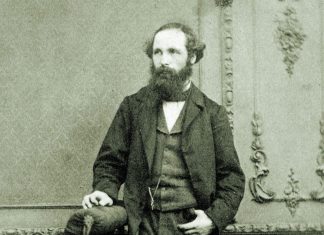
James Clerk Maxwell: The Physicist Who Developed the Theory of Electromagnetism and Contributed to...
James Clerk Maxwell was an influential and revolutionary 19th century physicist who made immense contributions to the fields of electromagnetism, mathematics, and optics. As a pioneering scientist, Maxwell developed many major theories and equations that laid the foundations for...
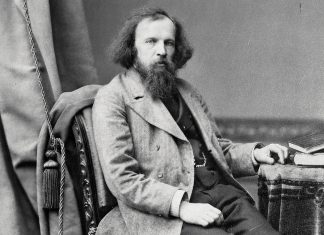
Dmitri Mendeleev: The Chemist Who Created the Periodic Table
Dmitri Mendeleev: The Chemist Who Created the Periodic Table
In 1869, a Russian chemist named Dmitri Mendeleev changed the way that scientists understood the elements. He developed the first organized list of elements, now known as the Periodic Table. Mendeleev’s...

Jupitersize exoplanet caught in act being torn to shreds by its star
What is an Exoplanet?Exoplanets are planets located outside of the solar system, orbiting stars other than our own sun. This definition expands beyond what astronomers traditionally view as a "planet" to include dwarf planets, asteroids and comets, among other...
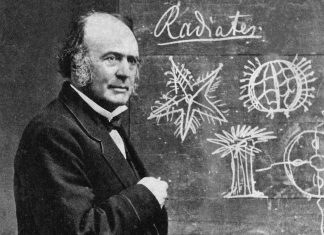
Louis Agassiz: The Paleontologist Who Made Contributions to the Study of Ice Ages and...
Louis Agassiz: The Paleontologist Who Made Contributions to the Study of Ice Ages and Glaciers
Louis Agassiz, the Swiss-born scientist, was a pioneering paleontologist, glaciologist, and advocate for the theory of natural selection. His contributions to the study of geology,...

The Physics of Flight: How Do Planes Stay in the Air?
The Physics of Flight: How Do Planes Stay in the Air?
Human beings have been captivated by the idea of flight since ancient times, with modern airplanes representing a far cry from the efforts of the Wright Brothers at...

Sequence genome assembly
Sequence genome assembly is the practice of building a set of complete DNA strands from their component pieces. It can be used in a variety of applications, such as mapping genetic variation, constructing de novo genomes and finding new organisms....

The Future of Education: How Technology is Changing the Way We Learn
The Future of Education: How Technology is Changing the Way We Learn The way we learn has changed drastically through the introduction of technology. In the past, the only way to learn anything was by memory, textbooks, or a teacher....
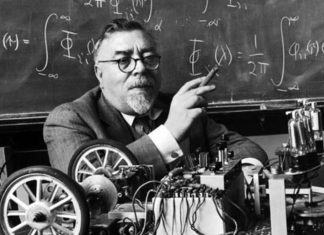
Norbert Wiener: The Mathematician Who Coined the Term “Cybernetics”
Norbert Wiener, The Mathematician Who Coined the Term "Cybernetics"
Norbert Wiener (1894–1964) was a mathematician, philosopher, and father of the field of cybernetics, who coined the term “cybernetics”. Despite his remarkable achievements and influence, his work remains largely unknown by...

Antoine Lavoisier: The Chemist Who Developed the Law of Conservation of Mass and Contributed...
Antoine Lavoisier: The Chemist Who Developed the Law of Conservation of Mass and Contributed to the Development of Modern Chemistry
On August 26th, 1743 in Paris, France, Antoine Lavoisier was born. During his lifetime (1743-1794), Lavoisier not only developed the...

Quantum Mechanics: The Mind-Bending Science of the Very Small
Quantum mechanics is a branch of physics that deals with the behavior of particles on the smallest of scales. It is one of the most important and influential scientific theories to emerge in the past century, and has brought...
MOST COMMENTED

Green ammonia
What is Green Ammonia - An Introduction to Sustainable Fuel
Green ammonia – a new and emerging source of sustainable energy – is gaining traction...